

LEARNING FIRST SCIENCE CURRICULUM
A world-class primary science curriculum that lifts the bar on learning, engagement and joy.
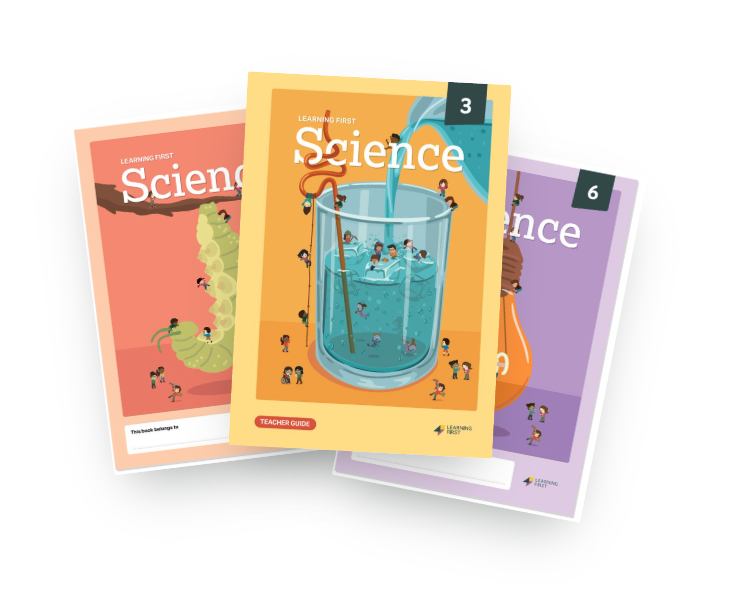
A complete, seven-year sequence from Foundation to Year 6 - built from what the world's highest-performing school systems teach, and designed for teachers to deliver with confidence.
OVERVIEW
What’s Included?
Four parts, designed to work together or separately, from Foundation to Year 6.
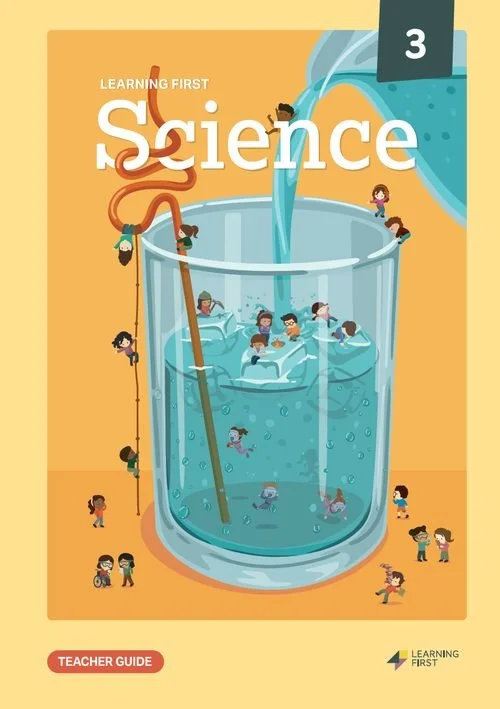
Teacher Guide
Everything you need to teach science with confidence, including lesson plans and activities, assessment tasks, answer keys, built-in ways to address student misconceptions and much more.
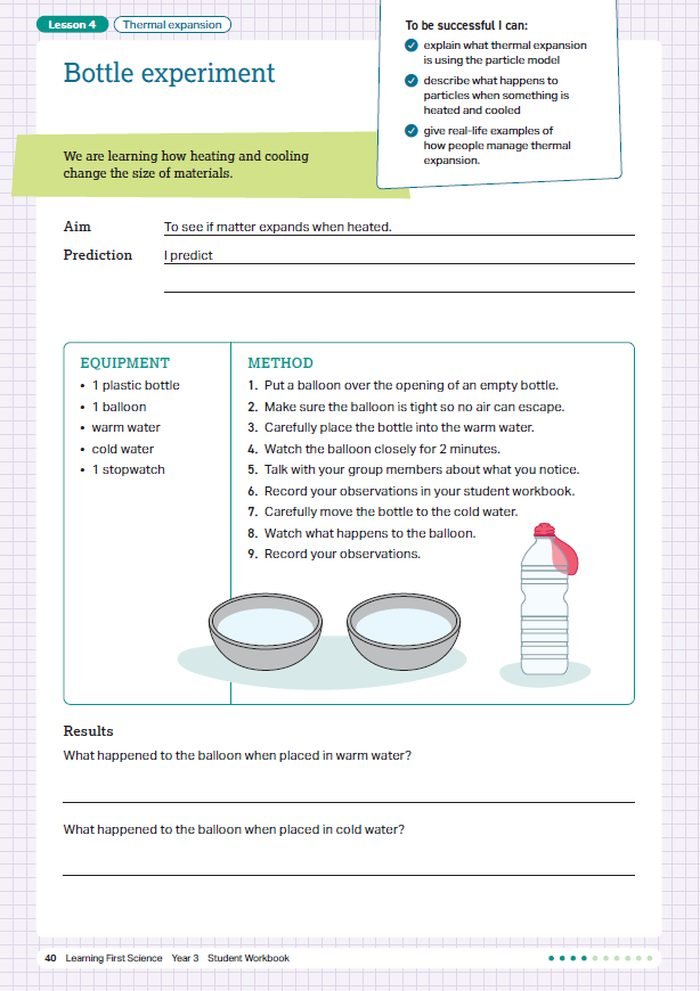
Student Workbook
A complete package for your students to dive into investigations, run experiments, demonstrate their learning, with built-in assessment tasks.
-
In the Student Workbook you will find the activities, investigations and experiments students complete in each lesson, and the questions that make them think hard about what they have just seen.
Every task is designed to focus student attention on the key features of the concept being taught. Hands-on and practical - but in service of rich, interconnected schemas of knowledge, tied to experiences and observations students can point back to years later. Students build disciplinary knowledge of how scientists find out about the world around them. Predicting, fair testing, observing, measuring, recording, concluding, learned in context with real practice.
Three kinds of task, chosen to fit the science:
Activities - focused practice for students to use new knowledge and vocabulary, and rehearse scientific explanations
Investigations - students observe, measure and record, then explain what they saw
Experiments - a fair test, set out the way scientists set it out: aim, prediction or hypothesis, method, results, conclusion
This is not scientist roleplay. Each activity is a deliberate, explicit, practical demonstration of the principle students are learning about. It was chosen because it teaches that principle, it lets students rehearse their new knowledge, and it is checked in the same lesson to confirm the learning is secure. And it can all be done with cheap, easily available equipment from supermarkets and common retailers - no lab, no specialist kit.
Around every task sit expertly crafted questions that direct student attention to the knowledge itself, and to how it connects with what they already know. Every lesson carries a Science Star: an extension question that asks students to apply their new knowledge flexibly, in an unfamiliar situation. Every unit includes a summative assessment task, so teachers can track what students have actually learned.
“Very engaging and great timing to play, experiment and learn all while having fun!” — Teacher
“That was the best lesson I've ever had.” — Year 6 student
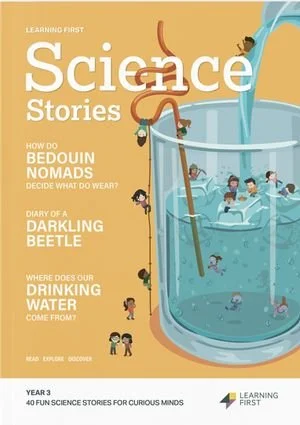
Science Stories
Engaging texts matched to every topic, spanning a range of genres to build literacy skills alongside science understanding. Includes text questions & morphology.
-
Science Stories are short, knowledge-rich texts woven throughout the Learning First Science suite. They take the scientific ideas students are learning and place them in an interesting real-world, historical or natural context. A story might explore the daily life of a working scientist, the longest experiment on record, or how people used science in the past and use it now. Rather than introducing disconnected facts, the stories show students that science helps us explain the world around us.
Each Science Stories book contains 40 stories directly linked to the four units taught in the year. There is a mixture of fiction and non-fiction, and a wide variety of text types - explanations, biographies, comics, procedures, news articles and opinion pieces. Accompanying the stories are questions for the teacher to use to guide discussion and connect the text to the science, along with the morphology of specific scientific vocabulary for use in lessons on language conventions.
Across the years, Science Stories help students to:
Build broad substantive knowledge in science
See how scientific ideas apply beyond the classroom
Encounter key vocabulary repeatedly, in meaningful contexts
Make connections between concepts taught across a unit
Develop listening, speaking and reading comprehension
Build curiosity and wonder about the world
Strengthen long-term understanding by revisiting knowledge through memorable examples
The stories are a bridge between science and literacy. Students hear and discuss rich informational texts, encounter scientific vocabulary, and practise listening, speaking and comprehension while continuing to build their science knowledge. Because the ideas are embedded in memorable people, places, animals, events and problems, the stories also make abstract concepts more concrete and easier to remember.
Science Stories do not replace explicit teaching or practical science. They add a complementary layer. Students learn the concept directly, observe or investigate it where appropriate, then encounter that knowledge again through a rich and engaging story - multiple ways to understand, connect and remember.
“The kids are loving the science stories, and vocabulary and understanding is going through the roof.” — Teacher
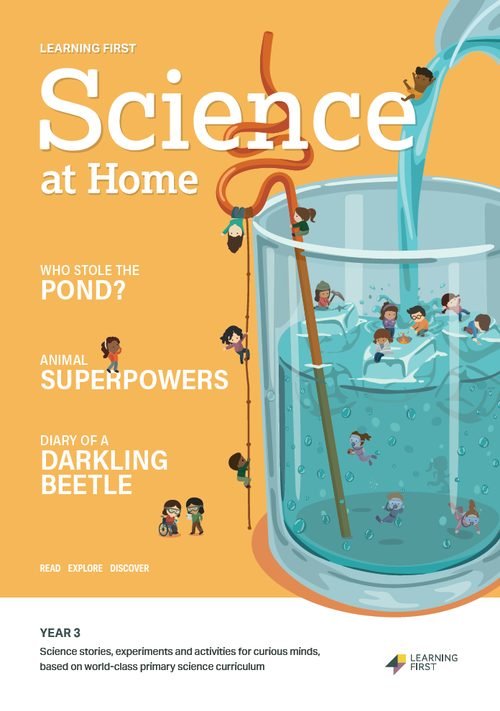
Science at Home
Bring science home with the full set of Science Stories texts plus hands-on activities and experiments that connect directly to classroom learning, designed for families to enjoy together.
-
The Science at Home books help students revisit and extend the science they are learning at school through simple activities, conversations and observations at home. Each book contains the 40 stories from that year's Science Stories, plus activities designed for families - no specialist knowledge, no expensive equipment, no complicated experiments.
The books connect directly to the knowledge and concepts taught in the units. By encountering the same ideas again in a different setting, students get another opportunity to recall important knowledge, use scientific vocabulary, and make connections between classroom learning and their everyday experiences.
The activities encourage students to notice science in the world around them - in their home, backyard, local parks and everyday routines. Science is not something that only happens in a science lesson or a laboratory. It is a way of understanding the world they experience every day.
Through Science at Home, students can:
Revisit and consolidate important scientific knowledge
Practise using scientific vocabulary
Connect classroom learning to everyday experiences
Explain their scientific thinking to others
Involve families in their science learning
Strengthen understanding through repeated retrieval in a different context
Explaining an idea, answering a question or completing an activity together requires students to retrieve and use what they have learned - which is what strengthens understanding and long-term retention.
School leaders regularly tell us how hard it is to communicate the curriculum to parents. Science at Home solves that problem in a tangible way: families can see exactly what their child is learning, and join in.
About the Teacher Guide
The Teacher Guide is the year in one book: 40 detailed lessons across four units, part of a complete seven-year sequence from Foundation to Year 6. One book to teach from.
Every unit opens with what you need before the first lesson
A summary of the unit — what students think now, what they will learn, and where it sits in the seven-year sequence
Science background knowledge for teachers, busting the misconceptions students may hold, and preparing teachers for expert science teaching
The knowledge and skills of the unit, with objectives in both teacher and student language
Pedagogical guidance, and the classroom routines that make explicit instruction routine
Retrieval practice question sets and guidance to improve retention, focused on the most important concepts in each unit
Morphology and vocabulary support, including links to the unit's ten science stories, a glossary, and links to learning in other subjects
Curriculum links for all Australian curriculums, including the Australian Curriculum, NSW syllabuses, and the Victorian and Western Australian curriculums. Other curriculum links can be developed as required.
What teachers are saying about the Teacher Guide
“When I pick it up and read it, I can see the lesson I need to teach.”
Heading
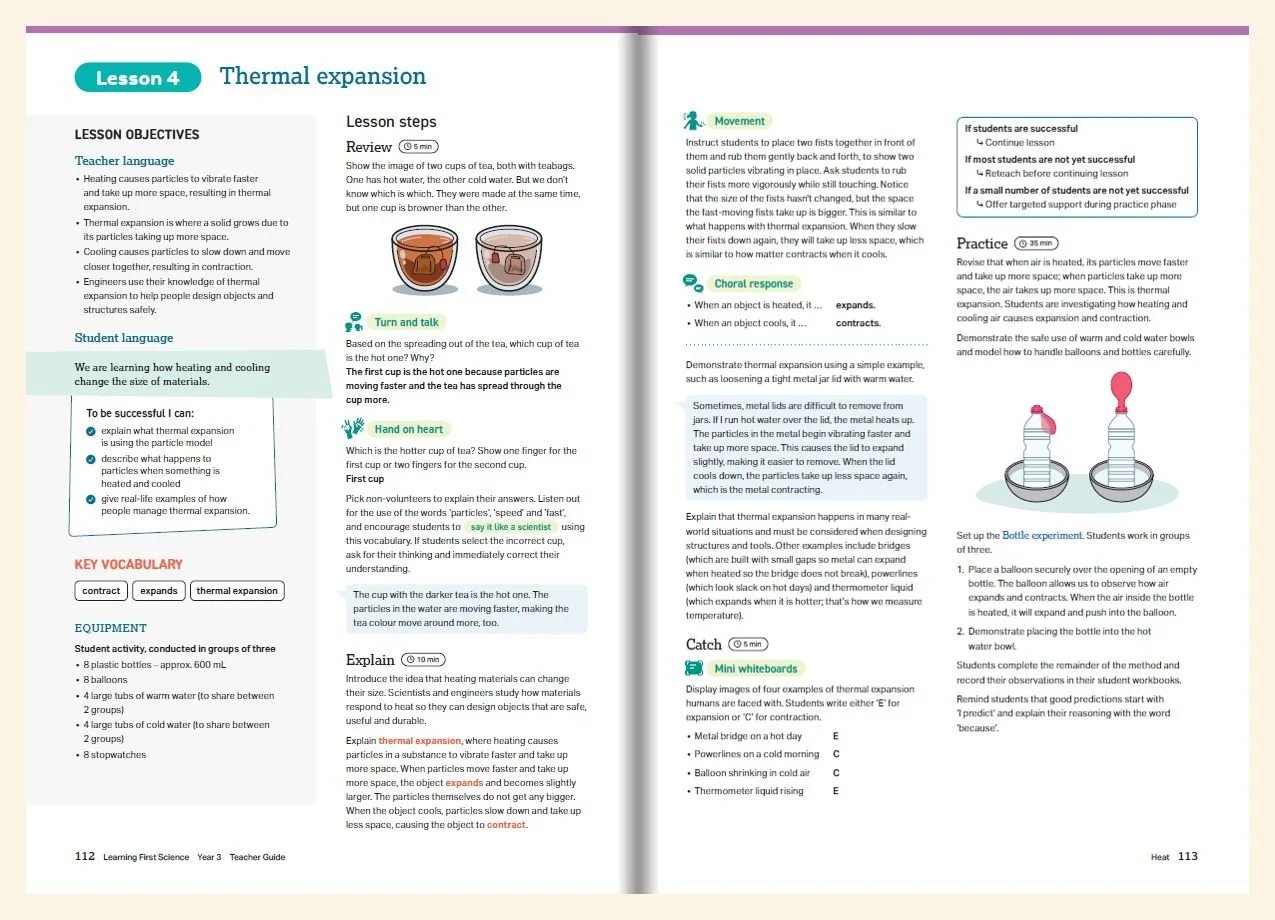
Each unit contains ten 60-minute lessons, each moving through the same five stages - Review, Explain, Catch, Practice, Close. Every lesson gives you expert-crafted explanations for the genuinely hard concepts, clear and precise language for every key idea and new term, answer keys for every question you ask, teacher notes that anticipate the tricky questions and explain the simplifications, and a decision point: move on, or reteach.
Heading
Learning First Science aligns with and improves on every Australian curriculum. We took what is taught in the best classrooms in the world and brought it home, because Australian students deserve the best in science curriculum and instruction.
Heading
Every lesson is built on the science of learning and explicit instruction. Highly interactive, participative teaching gives students structured and frequent opportunities to respond and practise, so they build rich schemas of knowledge rather than memories of an activity. There is enough detail to teach with confidence, and never a rigid script. This was never built to replace the teacher in the room - it was built to make great teachers unstoppable.
“Lessons were really detailed — so really helpful for me as I didn’t feel confident teaching science.”
SETTING THE BAR
Benchmarked against the world’s best
Learning First has conducted the most detailed curriculum benchmarking ever completed, comparing science curriculums in leading countries such as Singapore, Hong Kong, Japan, England, and in top-performing provinces such as Alberta, Canada.
Learning First Science is built on that research. Students come out with equivalent levels of science to that provided by curriculums in the highest-performing systems around the world.
THE FULL SEQUENCE
Seven years, mapped out in full
Every strand and topic from Foundation to Year 6, sequenced so knowledge builds year on year instead of being re-taught from scratch. Resources are provided to show how schools can report against each curriculum in Australia and in other countries.
INSIDE A LESSON
A consistent, explicit lesson structure
Every lesson moves through five stages, so instruction is clear, active and checked for understanding - delivered without slides, teachers facing their students, not a screen.
1
Review
5-10mins
Activate relevant prior knowledge
2
Explain
15-25mins
Clear, sequenced teacher scripts introduce new content
3
Catch
5mins
A whole-class check before moving on
4
Practice
20-35mins
Hands-on application with thinking prompts
5
Close
5-10mins
Consolidates key knowledge and skills
What teachers and students are saying
“So excited by the solar system unit. The lesson on Jupiter blew their minds.”
“Science is now one of the most enjoyable experiences for our kids in class”
“That was the best lesson I’ve ever had”
“We have students talking about science at recess and lunch … we’ve never had that before.”
WHY WE FOCUS ON READING AND WRITING
Teaching students to read and write like scientists
Science has its own forms of expression - different from English, and not intuitive. Students need to learn the particular language of science - defining and classifying, describing processes and sequences, explaining causation. Language scaffolds throughout units support students to express themselves scientifically with increasing complexity.
-
Students also learn to move beyond everyday language into the particular language of science — defining and classifying, describing processes and sequences, and explaining causation. “The cute little ant was tiptoeing under the leaves and staying safe” becomes “I observed an ant with a small body, which may help it to survive in the leaf litter because it can crawl under leaves to hide from predators.”
Learning First Science creates a cycle that improves learning and reading comprehension across the curriculum. The stories reinforce the knowledge learnt in science classes. This builds knowledge and supports reading comprehension that supports learning across the curriculum, including helping students to better access new learning in science.
-
Learning First Science improves reading comprehension that lifts learning across the curriculum.
Research is clear that after about Grade 4, the biggest predictor of performance on reading comprehension assessments is background knowledge. We need to build background knowledge in multiple subjects to improve reading comprehension across the whole curriculum.
Learning First Science does this not only through what is learnt in the science units themselves, but in the accompanying stories and texts of different genres that build and reinforce science knowledge, lift reading comprehension, and support reading at each year level.
A cycle is created that lifts learning. The stories reinforce the knowledge learnt in science classes. This builds knowledge and supports reading comprehension. In turn, this supports further learning across the curriculum, and also allows students to better access new learning in science.
The research shows we need to improve and support reading of different genres of increasing complexity in science - not just English.
It is also a fantastic and enjoyable way for students to learn. It helps them engage with the science knowledge in various ways, and broadens understanding of science and its applications. Young people remember more science knowledge when it is told - and reinforced - through storytelling. Importantly, it continually broadens and reinforces new vocabulary that is so important for learning across the curriculum.
Learning First Science was never built to be teacher-proof. It has been designed to make teachers unstoppable.
Each unit opens with science background knowledge and approaches to address student misconceptions are built into lessons, at teachers’ fingertips at the time they need it. The consistent lesson structure comes with expert-crafted explanations for genuinely hard concepts, clear and precise language for every key idea and new term, and teacher notes that anticipate tricky questions, explain simplifications, and go deeper when needed - helping teachers understand progression across the curriculum, understand each unit as a whole, and deliver every lesson effectively.
Learning First Science is not only built on the leading research on science curriculum and instruction, but on years of work with teachers and school leaders on the support and resources they want. At Learning First, we have surveyed over 30,000 educators across the last few years asking them about what works for them, what doesn’t, and what they need to grow their teaching and support learning of their students.
“When I pick it up and read it, I can see the lesson I need to teach.”
— Teacher
Built to make great teachers unstoppable
-
Learning First Science is backed by a full suite of supporting resources, because building capability requires expertise to be continually developed and reinforced, responding to both just-in-time needs and longer-term development:
Teacher app and platform, and in-person professional development
Video demonstration lessons
2–5 minute lesson-prep reminders
The ability to ask questions about content and instruction
Content summaries and explainers
Podcasts on topics teachers want to go deeper on
Guidance on how to teach primary science and deliver explicit instruction, with every routine demonstrated and explained
Leadership supports and guides for professional learning teams.
These resources will be available for subscribers shortly.
ADAPT TO YOUR NEEDS
Adaptable Delivery, Uncompromised Sequence
Register your interest
Leave your details and we’ll invite you to a webinar on Learning First Science and/or talk through what Learning First Science could look like at your school.
SEE IT FOR YOURSELF
See exactly what your students would get
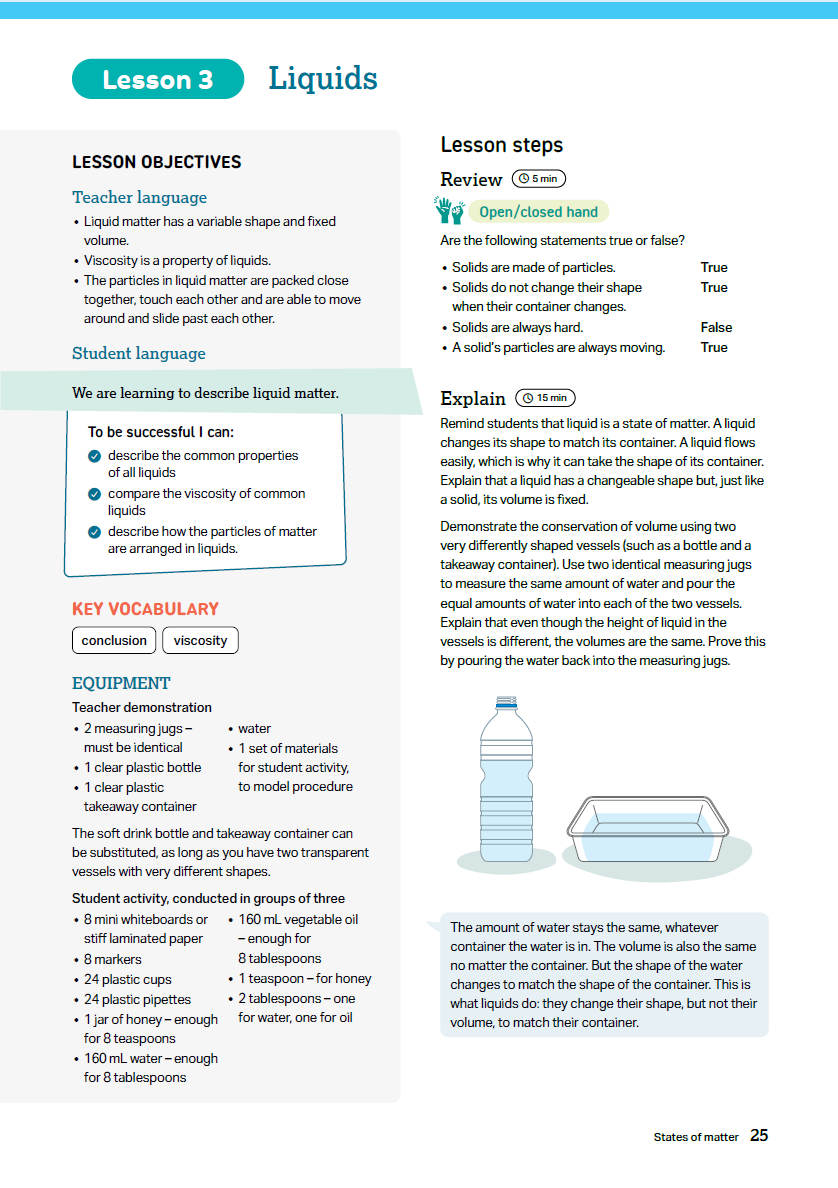
The Year 3 sample is a full unit in Year 3 chemical sciences - States of matter.
It includes:
Full Teacher Guide for the unit
A sample from the Student Workbook
A sample from Science Stories
BEYOND THE CLASSROOM
Connecting learning in school to the home
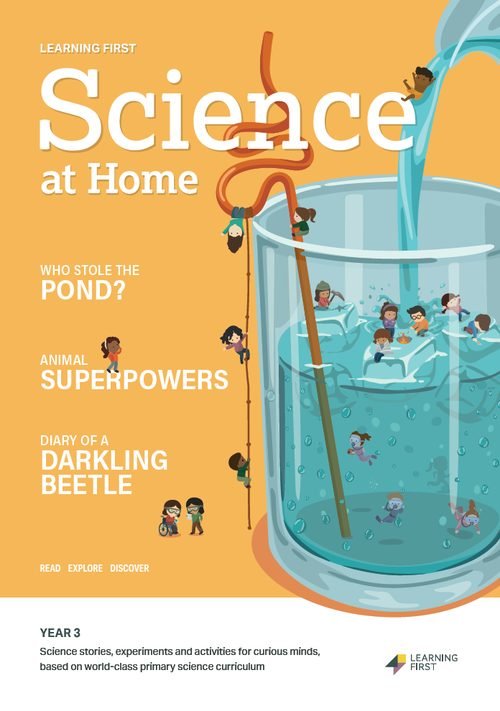
Science at Home brings the full set of Science Stories texts plus hands-on activities and experiments that connect directly to classroom learning - designed for families to enjoy together.
Connecting what is taught in school to the home supports learning in numerous ways, and provides a tangible way for schools to communicate what’s in the curriculum to families.
Frequently Asked Questions
-
Great science education does not choose between rigour and engagement. It gives students both. Learning First Science uses an explicit instruction approach where students are engaged in learning that is joyful. Every lesson moves through five stages, so instruction is clear, active and includes frequent checks for understanding. Students engage in regular hands-on learning. New learning is built in small, connected steps with evidence-based classroom routines throughout. You have enough detail to teach with confidence, without a rigid script.
-
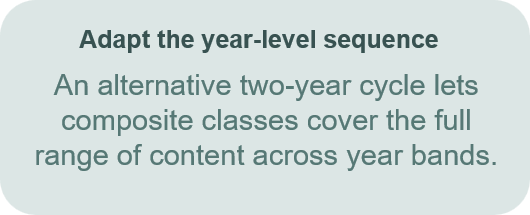
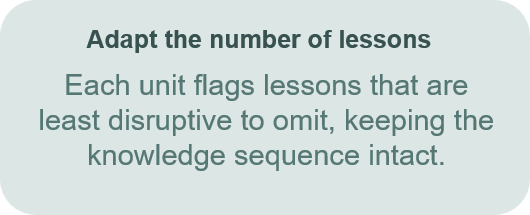
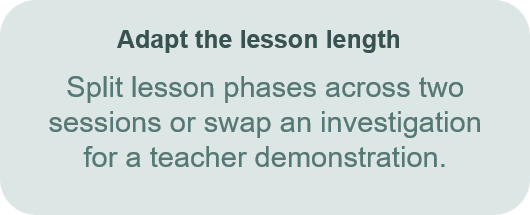
Learning First Science is based on 40 hours of instruction per year. Each year level includes four units, with ten 60-minute lessons in each unit. Learning First Science provides advice for how you can adapt to your school’s needs. If you need to adapt the year-level sequence to cater for composite classes, a 2-year cycle is provided. If you need to adapt the number of lessons, each unit identifies a small number of lessons that, if omitted, will be least disruptive to the overall learning sequence. If you allocate less than 60 minutes to science, we provide advice about how to adapt lesson length.
-
Learning First believes that every student, regardless of background, postcode or prior achievement, deserves access to ambitious science curriculum that provides windows into new worlds of learning.
Learning First Science has been developed from detailed global curriculum benchmarking so students are learning the scientific content equivalent to science curriculums across the world’s highest-performing school systems.
-
Yes. Learning First Science includes frequent assessment in lessons to monitor student understanding, and students complete written work in each lesson. Every unit incorporates summative assessment in the form of a common assessment task, a lesson activity that draws together the learning from the unit, or both. Answers to all assessments are provided so you have clarity about the expected level.
-
As much as possible, Learning First Science requires only simple equipment that you can purchase at supermarkets and common retailers. Occasionally units require more specialised equipment, for example, thermometers or electronic components. These have been used sparingly and only when this equipment is essential for student learning.
-
Learning First Science supports students’ reading and writing in science and beyond throughout the years of primary school. The Science Stories provide rich, engaging texts across a range of genres that can enhance student learning in literacy. You are provided with support to teach the morphology of scientific vocabulary in each unit, as well as text-structure questions relevant to the specific genre of each story. Students’ oral and written language in science is built through explicit teaching. Students learn the particular grammar and language of science, which build in complexity through the years, and the Teacher Guide steps you through how to teach this.
-
You can teach Learning First Science using the Teacher Guide and Student Workbook. These are essential components. We strongly recommend you pair these with the Science Stories, so students can build their reading comprehension and reinforce the learning in their science classes through rich, engaging texts. Science at Home is designed for families to enjoy together, and includes the full set of Science Stories texts plus hands-on activities and experiments that connect directly to classroom learning.
-
Learning First Science provides advice for how you can adapt to your school’s needs. If you need to adapt the year-level sequence to cater for composite classes, a 2-year cycle is provided. If you need to adapt the number of lessons, each unit identifies a small number of lessons that, if omitted, will be least disruptive to the overall learning sequence. If you allocate less than 60 minutes to science, we provide advice about how to adapt lesson length.
-
Learning First Science lessons are practical, engaging and classroom-tested in a range of schools. Students discuss ideas, conduct investigations, build models, take part in demonstrations, complete hands-on activities and explore scientific phenomena. Importantly, students are not required to use screens or tablets. They are encouraged to think, talk, write, explain and understand. Learning First Science is not provided in slide format, although you are provided with an image pack with high-resolution versions of images referenced in the Teacher Guide, so you can show images to students in whatever format works best for you.
-
Please fill in the web form above and contact us for pricing information. Pricing is designed to be affordable for schools.
-
Learning First Science is based on global benchmarking of the best science curriculums in the world. But we know that local curriculums need to be covered and teachers often need to report against their local curriculum.
Each unit in the Teacher Guide includes a section showing how the curriculum can be reported against for each Australian Curriculum. Subscribers can obtain more information to support reporting against a local curriculum from www.learningfirst.com/science.